Being an Executor of a Will Explained
The Executor of a Will is named in the Will as responsible for dealing with the estate, including distributing inheritance to Beneficiaries


Being an Executor of a Will: Responsibilities, Rights and Powers Explained
The executor of a will is named in the will as responsible for dealing with the estate, including distributing inheritance to beneficiaries.
If there is no will, or the executor is unwilling or unable to act due to physical or mental health issues, an administrator (or Personal Representative) is appointed to carry out the role instead.
Who can be an Executor of a Will?
Anyone aged 18 or above can be an executor. Normally two executors are named in a will, but up to four can act at a time.
What power does the Executor of a Will have?
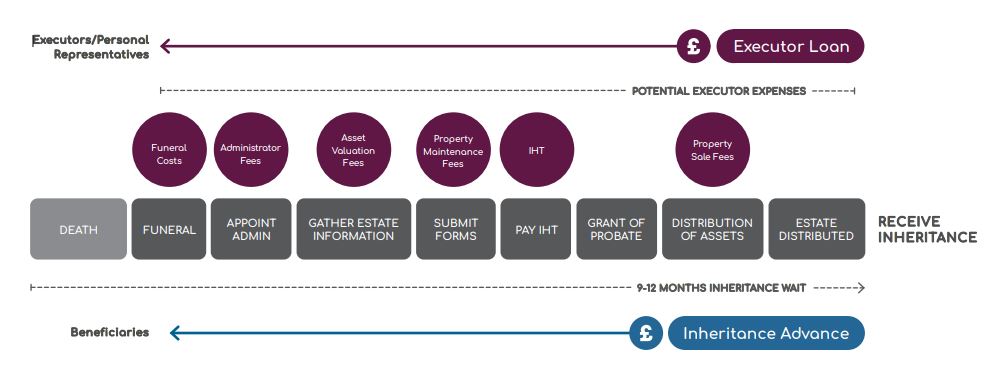
Executors are responsible for carrying out the instructions written in a will. Their core responsibilities follow a defined sequence:
| Step | Responsibility | When it happens |
|---|---|---|
| 1 | Arrange the funeral (if the will specifies) | Immediately after death |
| 2 | Collect all assets — property, bank accounts, investments, and personal possessions | During estate valuation |
| 3 | Apply for the Grant of Probate — if needed | After estate valuation |
| 4 | Pay debts owed by the deceased and settle any inheritance tax due | Before probate is granted |
| 5 | Distribute the estate to beneficiaries named in the will | After probate is granted and debts cleared |
Does the Executor have to apply for Probate?
Everything left by the deceased — money, property, and personal possessions — is known collectively as their estate. An executor needs to calculate its total value. Typically, if an estate exceeds £15,000, probate must be granted. Only once the Grant of Probate is issued does the executor have legal authority to carry out the instructions in the will.
For a full breakdown of the probate process and typical timelines, read our probate guide and our guide to how long it takes to receive an inheritance.
Are Executors of a Will liable for Inheritance Tax?
Yes. It is the executor’s responsibility to manage any inheritance tax (IHT) liability. The appropriate IHT forms must be completed and the bill settled with HMRC before the estate can be released. In practice, this often means the executor must pay the IHT bill from their own funds first and reclaim it from the estate once probate is granted.
How do Executors pay Inheritance Tax?
If the estate is liable for IHT, the executor must settle the bill within six months of the deceased’s passing. IHT must be paid before the estate can be distributed to beneficiaries. For a full explanation of rates, thresholds, and payment options, read our inheritance tax guide and our guide to when and how to pay IHT.
If you are an executor struggling to pay an IHT bill before estate funds are accessible, Level’s Inheritance Tax Loan is paid directly to HMRC — with no personal liability and no monthly repayments.
What is the Executor of a Will entitled to?
An executor has the authority to manage the affairs of the estate in whatever way they determine best for fulfilling the deceased’s wishes.
What expenses can an Executor claim?
Executors can claim back any out-of-pocket expenses from the estate. This may include probate court fees, inheritance tax payments, or costs to maintain property. It is recommended that executors provide beneficiaries with receipts and invoices for all such payments.
If the will names a professional executor, they are entitled to charge a fee for their services. However, if beneficiaries are unhappy with those fees, they have the right to request the named executor renounce their role — in which case a substitute executor would step in.
Can the Executor of a Will also be a Beneficiary?
There is no rule preventing executors from also being beneficiaries. It is entirely normal and legal to name the same person as both executor and beneficiary in a will. In some cases, an executor may hold only that role and not be a beneficiary at all.
Can an Executor also be a Witness to the same Will?
Yes. An executor can be one of the two official witnesses needed to validate a will, so long as they are not also a beneficiary.
How does an Executor distribute money to Beneficiaries?
Once the Grant of Probate has been issued, executors can distribute the estate following the instructions in the will. Before any distribution takes place, all outstanding debts must be settled. There is a strict order of priority:
- Pecuniary legacies — specific gifts of set sums of money or particular items
- Residuary estate — whatever remains after all debts, taxes, and pecuniary legacies have been paid
What if Beneficiaries need access to inheritance sooner?
If beneficiaries need access to their inheritance before the Grant of Probate is issued, Level’s Inheritance Advance allows beneficiaries to access up to 60% of their expected inheritance sooner. To find out more, get in touch with Level.
Does an Executor have to show accounting to Beneficiaries?
Yes. The executor is legally required to keep track of all costs and be able to provide evidence of any estate transactions. Beneficiaries are entitled to request these accounts at any time after probate has been granted.
How long does an Executor of a Will have to settle an estate?
On average, it takes 9 to 12 months for an executor to settle an estate, though complex cases involving property, overseas assets, or disputes can take considerably longer.
Pecuniary legacies should be paid within a year of the death — this is known as the Executor’s year. If an executor is unable to pay within that timeframe, beneficiaries can claim interest on the outstanding amount. For a full breakdown of probate timelines and what causes delays, see our guide to how long inheritance takes.
What happens if an Executor of an Estate dies?
If an executor dies or is unable to serve, and no other executor is named in the will, the Non-Contentious Probate Rules apply in England and Wales. These rules allow a residuary beneficiary to step into the executor role. The named beneficiaries will need to agree on who takes on the role.
What happens if the Executor dies after Probate is granted?
If an executor dies after probate has been granted, the executor of their own will must take on the role of administering the first estate. This is known as Chain of Representation and may require a new Grant of Probate. If the deceased executor did not leave a will, the rules of intestacy will determine who deals with their estate.
Can the Executor of a Will withhold money from Beneficiaries?
In most circumstances, the executor must follow the instructions in the will. However, there are limited exceptional circumstances where an executor can withhold or delay distribution:
- If unknown creditors emerge, the executor can delay settlement with beneficiaries for up to six months while debts are resolved.
- If the executor has concerns over the welfare of a child beneficiary, they can apply to the court to withhold the inheritance until the child turns 18 in England or 16 in Scotland.
- If the executor considers a beneficiary vulnerable, they can pay the inheritance into a discretionary trust rather than distributing it directly.
If you believe a beneficiary’s interests are being unfairly withheld, see our guide to probate disputes.
What happens if the Executor does not follow the Will?
If an executor has not carried out their duties properly — whether through negligence, error, or deliberate action — beneficiaries can take legal action against them. For more on how inheritance disputes are handled, read our guide to probate disputes. If you need funding to pursue or defend a claim, Level’s Probate Dispute Funding may be able to help.
Can an Executor change a Will after death?
Surprisingly, yes — but only if all beneficiaries who would be worse off by the change agree to it. Any such variation must be formalised within two years of the death.
What happens when joint Executors disagree?
Usually two executors are named in a will, though there can be up to four. All executors share responsibility jointly — every decision must be agreed by all of them. If they cannot reach agreement, they must either renounce their role or be removed via the Probate Court.
How Level can help Executors
Interested in applying for funding?
Apply now using the button below. A member of the team will review your information and arrange a time to speak with you.
Apply for funding today